Ewelina Podrez-Siama · tools and lists
AI knowledge cutoff dates: ChatGPT, Claude, Gemini and Grok
A client asks why ChatGPT still describes their company the way it looked before the rebrand. And why the model names a competitor but doesn’t seem to know their product. Before we answer that the model “has old data”, let’s look at how this actually works.
models in the table,
in 7 groups
months between the oldest
and the newest memory
last checked against
documentation, 2026
Term
What is an AI model’s knowledge cutoff?
Definition
A knowledge cutoff is the time boundary of a specific model version’s knowledge, as declared by its provider. It is not a guarantee – the model does not know everything that existed before that date, and later information can still reach an answer through search, an uploaded file, product memory or the conversation itself.
Providers use the term knowledge cutoff. Anthropic publishes a second value alongside it – training data cutoff, the broader boundary of the data used in training. These are not synonyms and the difference is worth keeping in mind.
A knowledge cutoff shows what the model holds in memory; it guarantees nothing about what the model will say about you. Between the two sits grounding, meaning an answer built on external sources and on context supplied at generation time – and that works differently in every system. Below are the cutoff dates collected from provider documentation, with the ones that were never officially published marked as such.
Table · 52 models
AI model knowledge cutoff dates: the table
Clicking a header sorts the whole table and temporarily dissolves the groups.
The table scrolls sideways →
| Anthropic · Claude | |||
|---|---|---|---|
| Claude Opus 5.5recommended starting point in Anthropic’s documentation | June 2026released: 22 Sep 2026 | – | Supported, depending on the product |
| Claude Fable 5.1 | June 2026released: September 2026 | – | Supported, depending on the product |
| Claude Mythos 5.1trusted-access programmes and Claude Security only | June 2026***released: September 2026 | – | Supported, depending on the product |
| Claude Opus 5previous-generation model | May 2026released: July 2026 | – | Supported, depending on the product |
| Claude Sonnet 5 | January 2026released: June 2026 | – | Supported, depending on the product |
| Claude Fable 5previous-generation model | January 2026released: June 2026 | – | Supported, depending on the product |
| Claude Mythos 5selected partners only, Project Glasswing | January 2026released: June 2026 | – | Supported, depending on the product |
| Claude Opus 4.8legacy model per Anthropic’s documentation | January 2026released: May 2026 | – | Supported, depending on the product |
| Claude Opus 4.7legacy model per Anthropic’s documentation | January 2026released: April 2026 | – | Supported, depending on the product |
| Claude Sonnet 4.6legacy model per Anthropic’s documentation | conflicting sources‡model documentation: August 2025 (training data: January 2026); Transparency Hub: May 2025 | – | Supported, depending on the product |
| Claude Opus 4.6legacy model per Anthropic’s documentation | May 2025training data: August 2025 · released: February 2026 | – | Supported, depending on the product |
| Claude Opus 4.5legacy model per Anthropic’s documentation | May 2025training data: August 2025 · released: 24 Nov 2025 | – | Supported, depending on the product |
| Claude Haiku 4.5 | February 2025training data: July 2025 · released: October 2025 | – | Supported, depending on the product |
| Claude Sonnet 4.5legacy model per Anthropic’s documentation | January 2025training data: July 2025 · released: 29 Sep 2025 | – | Supported, depending on the product |
| OpenAI · GPT | |||
| GPT-6 Lunacheapest model in the family | 18 May 2026API model catalog | – | Supported, depending on the product |
| GPT-6 Astraflagship model | 30 April 2026API model catalog; AI Act: latest training data acquired by 6 Aug 2026 | – | Supported, depending on the product |
| GPT-6 Sol | 20 April 2026API model catalog | – | Supported, depending on the product |
| GPT-5.6Sol, Terra, Luna; the gpt-5.6 alias points to Sol | 16 February 2026GPT-5.6 Sol model page | – | Supported, depending on the product |
| GPT-5.5 | 1 December 2025model page | – | Supported, depending on the product |
| GPT-5.4 | 31 August 2025model page | – | Supported, depending on the product |
| GPT-5.3 Codex | 31 August 2025model page | – | Supported, depending on the product |
| GPT-5.2 | 31 August 2025model page | – | Supported, depending on the product |
| GPT-5.1retired from ChatGPT 11 Mar 2026, available via API | 30 September 2024model page | – | Depends on the deployment |
| GPT-5retired from ChatGPT 13 Feb 2026, available via API | 30 September 2024model page | – | Depends on the deployment |
| GPT-4.1retired from ChatGPT 13 Feb 2026, available via API | 1 June 2024model page | – | Depends on the deployment |
| o3available via API | 1 June 2024model page | – | Depends on the deployment |
| o4-miniretired from ChatGPT 13 Feb 2026; deprecated in the API catalog | 1 June 2024model page | – | Depends on the deployment |
| GPT-4oretired from ChatGPT 13 Feb 2026, available via API | 1 October 2023model page | – | Depends on the deployment |
| GPT-4o miniavailable via API | 1 October 2023model page | – | Depends on the deployment |
| SpaceXAI (xAI) · Grok | |||
| Grok 4.7newest SpaceXAI model | May 2026model page; released: 21 Sep 2026 | – | Yes, with the Web Search and X Search tools enabled |
| Grok 4.6still available in the API | 1 February 2026†earlier version of the xAI documentation; released: 12 Aug 2026 | – | Yes, with the Web Search and X Search tools enabled |
| Grok 4.5still available in the API | 1 February 2026†earlier version of the xAI documentation; released: 8 Jul 2026 | – | Yes, with the Web Search and X Search tools enabled |
| Google · Gemini | |||
| Gemini 3.8 Flash | March 2026**model card; released: 2 Sep 2026 | – | Yes, via Search Grounding |
| Gemini 3.7 Flash | March 2026**model card; released: 13 Aug 2026 | – | Yes, via Search Grounding |
| Gemini 3.6 Flash | March 2026**model card; released: 21 Jul 2026 | – | Yes, via Search Grounding |
| Gemini 3.5 Flash-Lite | March 2026**model card; released: 21 Jul 2026 | – | Yes, via Search Grounding |
| Gemini 3.5 Flash | January 2025released: 19 May 2026 | – | Yes, via Search Grounding |
| Gemini 3.1 Prostill in preview; flagship of the Pro tier | January 2025released: 19 Feb 2026 | – | Yes, via Search Grounding |
| Gemini 3 FlashGemini 3 Pro preview shut down 9 Mar 2026 | January 2025released: 17 Dec 2025 | – | Yes, via Search Grounding |
| Gemini 2.5 Pro, 2.5 Flashnot deprecated in the Gemini API, no shutdown date; existing users only since 18 Sep 2026 | January 2025Gemini API and Firebase AI Logic documentation | – | Yes, via Search Grounding |
| Gemini 2.0 Flashshut down in the Gemini API on 1 Jun 2026; may persist in older deployments | conflicting sources‡Gemini API: August 2024; Firebase AI Logic: June 2024 | – | Depends on the deployment |
| Open-weight models | |||
| Muse Glimmer 30BMeta · open weights, distilled from Muse Spark | 4 January 2026Meta model card; released: 10 Aug 2026 | – | Not in the base model; possible via RAG |
| Llama 4Meta · Scout, Maverick | August 2024Meta model card; released: April 2025 | – | Not in the base model; possible via RAG |
| DeepSeek V4.1 FlashDeepSeek · also serves requests sent to V4 Pro | not publishedthe model card describes the architecture, not a date; released: 10 Sep 2026 | – | Not in the base model; possible via RAG |
| DeepSeek V4DeepSeek · Pro, Flash; replaced in the API by V4.1 Flash | not publishedthe model card describes a 32T-token corpus, not a date | – | Not in the base model; possible via RAG |
| Qwen 3.6, Qwen 3.8Alibaba | not publishedmodel cards describe the architecture, not a date | – | Not in the base model; possible via RAG |
| Mistral Large 3Mistral AI | not publishedthe model card gives only the release date: 2 Dec 2025 | – | Not in the base model; possible via RAG |
| Mistral Medium 3.5Mistral AI | not publishedthe model card gives only the release date: 28 Apr 2026 | – | Not in the base model; possible via RAG |
| Polish models | |||
| Bielik 11B v3SpeakLeash and Cyfronet AGH | not publishedAI Act: data acquired until May 2025, public datasets until November 2025 | – | Not in the base model; possible via RAG |
| PLLuMHIVE AI consortium | early 202512B-base-250801 model card; July 2025 models: autumn 2024 | – | Not in the base model; possible via RAG |
| Products without a single cutoff date | |||
| Perplexity | no single datedepends on the underlying model | – | Yes, search on by default |
| Microsoft Copilot | no single datedepends on the product and on the model chosen or routed automatically | – | Yes, depending on the product and mode |
† Confirmation level. Dates without a dagger come from the provider's current documentation. A dagger marks a value the current documentation no longer shows – in this table, dates from an earlier version of the xAI documentation – and it should be checked before you cite it.
‡ Conflicting provider sources. Two official sources from the same provider give different dates, so I don't pick one and don't calculate a gap. Claude Sonnet 4.6: the model page in Anthropic's documentation gives August 2025 (training data: January 2026), the Transparency Hub gives May 2025. Gemini 2.0 Flash: the model page in the Gemini API documentation gives August 2024, the Firebase AI Logic documentation gives June 2024.
Two dates at Anthropic. In the table I give the reliable knowledge cutoff – the date through which, according to Anthropic, the model's knowledge is most extensive and reliable. Anthropic's model documentation also publishes a separate training data cutoff, which can fall later – February and July 2025 for Haiku 4.5, January and July 2025 for Sonnet 4.5. Where the two values differ, I give the second one in the caption. The Transparency Hub describes training data in prose and, for Sonnet 4.6, gives a different cutoff than the model documentation.
*** Claude Mythos 5.1. The model does not appear in the public model catalog and has no cutoff of its own. The Transparency Hub states explicitly, however, that Mythos 5.1 and Fable 5.1 are the same model, differing only in their level of safeguards, so I assign it Fable 5.1's cutoff. This is an inference from the documentation, not a reading from a model card. The Mythos family also shows that a cutoff and availability are two different things: on 12 June 2026 Fable 5 and Mythos 5 were switched off as a result of US export controls; the controls were lifted on 30 June, and on 1 July Fable 5 returned for all users, Mythos 5 for selected US organisations. The cutoff stayed the same throughout – what changed was whether the model could be used at all.
OpenAI variant names. Sol and Luna now denote models in the GPT-6 family, but the same names appeared earlier in GPT-5.6. A variant name alone therefore indicates neither the generation nor the cutoff – the full model identifier decides, for example gpt-6-luna. On top of that, the gpt-5.6 alias routes requests to GPT-5.6 Sol.
** Gemini and two dates in one model card. Google DeepMind's model cards for 3.5 Flash-Lite, 3.6 Flash, 3.7 Flash and 3.8 Flash give a March 2026 cutoff and immediately add that in some domains the model's knowledge extends only to January 2025, in line with the policy for the Gemini 3 family. In the column I give the value declared as the main one. This is the only case in the table where the provider itself describes its cutoff as uneven – more on this in the section on the effective cutoff.
Google documentation in four places. Cutoff dates for specific Gemini models are in the model cards on deepmind.google, not in the API documentation on ai.google.dev, which declares January 2025 for the whole Gemini 3 family. The discrepancy between these two sources is only apparent: the model card gives both values, the API documentation only the old one. The third place is the Vertex AI documentation in Google Cloud, which gives one date per model – for example January 2025 for Gemini 2.5 Flash-Lite and 3.1 Flash-Lite. The fourth is the Firebase AI Logic documentation, which lists dates for older models: January 2025 for the 2.5 family and June 2024 for Gemini 2.0 Flash, whereas that model's page in the Gemini API documentation gives August 2024 (see ‡).
SpaceXAI (xAI). The company now operates under the SpaceXAI brand, while its documentation remains at docs.x.ai. Grok 4.7 (released 21 September 2026) has a May 2026 cutoff on the current model page. Grok 4.6 and 4.5 are still available in the API, but their documentation pages now redirect to Grok 4.7; the date of 1 February 2026 was given for them by an earlier version of the documentation, hence the dagger. xAI also states plainly that without search tools enabled the model has no access to current events.
Microsoft Copilot. There is no single cutoff, because a combination of models from different providers runs underneath, and queries are sometimes routed between them automatically. The date therefore depends on the product, the mode and which model answered.
The “gap to today” column. Counted from the month of the declared cutoff to the current month, in the browser, each time the page loads. For entries without a declared date I don't estimate. Where the provider gives only an approximate period, as PLLuM does (early 2025), I count from the middle of that period and mark the result as approximate.
Mistral. The model cards in Mistral's documentation give the release date, parameters, context and pricing, but not the cutoff. Compilations that assign Mistral Large 3 a “December 2025” cutoff are repeating its release date. Mistral's help centre states plainly that the company does not disclose the datasets used for training, and its model compliance page gives release dates without a cutoff.
Polish models. PLLuM gives an approximate data range in its Hugging Face model cards: early 2025 for PLLuM-12B-base-250801 and autumn 2024 for the July 2025 models. Bielik gives no cutoff in either its model cards or its technical reports. Its AI Act summary, which covers v3 11B Instruct, enters May 2025 in the official field as the latest date of data acquisition, and in the description of public datasets gives a period running to November 2025. These are data-collection dates, not a declared knowledge boundary, which is why the column says “not published”. The v3 models did, however, start training from other providers' base models: the smaller variants from Qwen 2.5, and 11B v3 from Mistral 7B v0.2. What a Polish model knows therefore also includes what its base model learned.
Qwen. The model cards for Qwen 3.6 and 3.8 describe architecture and context length, with no cutoff. In the discussion under the official Qwen3.8 repository, the only answer to a question about the cutoff was: ask the model. That is exactly the method I warn against in the section on reading cutoff dates.
DeepSeek. The model cards for V4 and V4.1 Flash describe architecture and corpus, with no cutoff. According to DeepSeek's announcement, since 14 September 2026 requests sent to deepseek-v4-pro are served by V4.1 Flash, and the deepseek-v4-flash name also points to the newer model. An API model name therefore does not settle which model actually answers.
Key point
The gap between the freshest and the oldest memory in this table is 32 months. Claude Opus 5.5 and Fable 5.1 reach June 2026. GPT-4o, retired from ChatGPT but still present in integrations and plugins, stopped in October 2023.
A release date is not an indicator of how fresh a model's memory is, and neither is the model's position in the price list. In the GPT-6 family the cheapest model, Luna, has a declared cutoff of 18 May 2026, while the flagship Astra has 30 April. The model that costs a hundred times less per input token has a cutoff 18 days later.
How to read
How to read cutoff dates: three things that mislead
A declared cutoff is a soft boundary. Data in the training corpus thins out as collection approaches its end, so the final months before the cutoff are represented more sparsely than earlier ones. Anthropic names this openly by separating the reliable knowledge cutoff from the training data cutoff, and Google's Gemini model cards note that an older date applies in some domains. Other providers give a single date, which does not mean the effect is absent there – they simply don't describe it.
A cutoff is not a release date
A model released in 2026 may have its memory stopped in January 2025. For some models the gap between release and cutoff runs to well over a year, and it has no fixed value, so the version number says nothing about how fresh the data is.
A cutoff is not the date in the model name
Identifiers such as
claude-haiku-4-5-20251001orBielik-11B-v3-Base-20250730denote a version or a training checkpoint. That is not the boundary of the data.A model's answer about itself is not a source
Hundreds of articles about earlier generations' cutoffs sit in the training data, so a model can reproduce someone else's date as its own. What counts is what the provider states in the documentation for a specific model identifier. Google itself, in the Vertex AI documentation, recommends putting Gemini 3 Flash's cutoff into the system instructions when search is turned off.
The best example of Anthropic's two dates is Claude Sonnet 4.5. Its training data runs to July 2025, while its most extensive and reliable knowledge ends in January 2025 – half a year earlier. A comparison based on the training data boundary alone would rate this model as fresher than it behaves in practice.
Research
Effective cutoff: knowledge does not stop evenly across topics
A declared cutoff does not apply equally to every source and every topic in the training corpus. A team from Johns Hopkins University showed this in Dated Data: Tracing Knowledge Cutoffs in Large Language Models (Cheng et al., arXiv:2403.12958), an Outstanding Paper at the COLM 2024 conference.
The authors introduced the notion of an effective cutoff – an empirically estimated boundary of a model's knowledge, calculated separately for individual sources and topics, as distinct from the single date declared by the provider. They proposed a way to estimate it by probing the model across successive versions of the same data, without access to the training corpus. The finding: effective boundaries often differ markedly from the declared date.
Their analysis of open corpora pointed to two causes:
- temporal misalignment in Common Crawl data – new dumps contain significant amounts of older content,
- deduplication schemes, which struggle with semantic duplicates and near-duplicates at the lexical level.
What this means for you. Your industry may be represented in a model up to a different point than the industry next door, under the same declared cutoff. A test on one topic does not generalise to the rest, and a single date from the documentation is a hint, not a guarantee.
Google also flags uneven knowledge coverage
Google states in its model cards that the declared cutoff does not apply evenly across all domains. The model cards for Gemini 3.5 Flash-Lite, 3.6 Flash, 3.7 Flash and 3.8 Flash give a March 2026 cutoff and then, in the same sentence, add that in some domains the model's knowledge extends only to January 2025 – in line with the policy for the whole Gemini 3 family.
That is a fourteen-month difference within a single model, depending on the topic. Google does not say which domains fall under which date, so for anyone building a brand this is information about uncertainty, not about a boundary. If your industry landed in the slower group, the model's knowledge of it may end in January 2025, even though the specification says March 2026. This is the provider's declaration, not a measurement of the effective cutoff using the Johns Hopkins method, but the two observations point in the same direction.
AI Act
Three dates for one model: what AI Act training-data summaries reveal
Since 2 August 2025, a provider of a general-purpose AI model placed on the EU market has had to publish a summary of its training content using the European Commission's official template (Article 53(1)(d) of the AI Act). The template includes a field for the “latest date of data acquisition/collection for model training”. That is a different boundary from the knowledge cutoff: it says when the provider collected its last data, not up to when the model knows the world.
The difference is clearest in the summary OpenAI published for GPT-6 Astra. One model, and as many as three dates, not counting the release:
| What the date means | GPT-6 Astra | Where it is given |
|---|---|---|
| Knowledge cutoff | 30 April 2026 | model page in the API documentation |
| Crawled data collection period | approx. March 2013 – May 2026 | AI Act summary, section on the GPTBot crawler |
| Latest acquisition of training data | no later than 6 August 2026 | AI Act summary |
| Placement on the EU market | 3 September 2026 | AI Act summary |
More than three months pass between the knowledge cutoff and the last data used in training. The summary does not say what was collected in that time. It does list every category of source:
- public data,
- data from partners,
- data from interactions in ChatGPT and Codex (subject to privacy settings),
- synthetic data generated by GPT-5.6, GPT-5.5 and GPT-5.4,
- data prepared with experts.
Without guessing, one conclusion follows: a knowledge cutoff does not mark the end of training. OpenAI declares reliable knowledge through 30 April, yet it was still collecting training data more than three months later.
The middle date is the most practical one for a brand, but it has limits. It covers content OpenAI collected through its own crawling; the document lists Common Crawl and other public datasets separately. It therefore does not mark the last date for every page that may have reached training, and it does not confirm the presence of any specific page. In the same document OpenAI states that its crawler respects a GPTBot block in robots.txt, including a ban on using content for training, and that it applies GPTBot signals – where possible – to domains in public datasets as well. Which bots visit your site and how to block them is covered in my list of crawlers and AI bots.
A single document can give several different dates. The summary for Bielik v3 11B Instruct, published by the SpeakLeash foundation, enters May 2025 in the official field as the latest date of data acquisition. SpeakLeash's own crawler collected data from November 2022 to May 2025, and public datasets – according to a later part of the document – were acquired until November 2025. None of these dates is a declared knowledge boundary, which is why the table says “not published” for Bielik and gives the data-acquisition dates in the caption.
Providers fill in the template in different ways. According to compilations by independent analysts, Google, Meta, Microsoft and OpenAI, among others, filled in the fields, while Anthropic, Mistral and xAI described their training data in prose. Models placed on the market before 2 August 2025 have until 2 August 2027 to publish a summary, and since 2 August 2026 the AI Office has been able to enforce the obligation.
What this means for you. The knowledge cutoff tells you up to when the model knows the world. The AI Act summary tells you when the provider was collecting data, including pages like yours. In an AI visibility audit it is worth having both: the first explains why the model doesn't know about your latest change, the second helps you judge whether your content could have reached training at all.
Model memory
Why ChatGPT doesn't know your new page
An answer is built from the knowledge held in the model's parameters and – depending on the product and its settings – from content added along the way: search results, an uploaded file, product memory, a connector or the conversation itself. The cutoff governs the first layer only. If your page appeared after the declared cutoff, don't assume its content sits in the model's parametric knowledge.
The catch is that retrieval fires conditionally. On general questions, category comparisons and recommendations the model often answers from memory, because it sees no reason to search. It then names what it knows – the competitors from before the cutoff. And even when it does search, what guides it in judging the sources it finds was shaped by data from before the cutoff. That is why being in a model's memory and being in an index are two separate things.
The practical conclusion. A change you made this month – a new name, a new offer, a new domain – will reach systems that fetch content live first, and the models' memory only in a version whose training covered it. Those are two different speeds and it is worth planning communication for both.
Propagation
Three speeds of propagation
Generative systems learn about changes on your site at different rates, and that rate depends on architecture, not on the quality of the content.
| Layer | How it works | When it sees a change |
|---|---|---|
| Search engine index AI Overviews, AI Mode, Gemini with Search Grounding | The answer is built on the search engine's current index | No earlier than after indexing; use of the page in an answer is not guaranteed |
| The provider's search layer Perplexity, ChatGPT Search, Claude with search | Own fetching, partner sources, cache, or several of these at once – depending on the operator | No earlier than after the sources that operator relies on are refreshed; use is not guaranteed |
| The model's parametric knowledge answers without reaching for the web | Information fixed in the weights of a specific model version | Once a version ships whose training or fine-tuning covered that information |
This difference in speed has a consequence that is easy to forget during an audit: a base model with no web access and no additional context will not see your page unless its content was fixed during training. This applies to open-weight models run locally – Llama, Muse Glimmer, Qwen, Bielik and Mistral. SEO has no direct influence on the base model, because the model itself does not visit the web. The two routes are the presence of your content in the training corpus, or delivering it through a RAG system, a search tool or another component deployed around the model. Which bots reach for your content at all is something you can check on the list of crawlers and AI bots.
Test
How to check whether a model knows your brand
Asking a model for its cutoff date won't give you a reliable answer, but asking about specific facts will. Instead of asking “what is your knowledge cutoff”, find out where the boundary of its knowledge about you actually runs.
- Turn off search in the interface, if it can be turned off. Without that you are testing grounding, not the model's memory.
- Ask about several well-documented facts from before the declared cutoff. A missing or wrong answer suggests that knowledge of the brand is thin or hard to surface – it does not prove the brand was absent from the corpus.
- Ask about a change made after the cutoff and check where the model got it. A correct answer may come from search, a file, a connector, product memory or an earlier part of the conversation rather than from parametric knowledge.
- Repeat the test on several models and in several fresh conversations. Divergences show differences in knowledge and in how information is retrieved, but a single question will not pin down the boundary.
- Check several topics, not only your own brand. Effective boundaries differ between fields, so a result from one area says nothing about the others.
- Record the conditions of the test: the full model identifier, the product or API, the state of search, the state of memory and connectors, the exact prompt and the date. Without that the result cannot be compared with the next measurement.
A single test says little, because models answer non-deterministically. A repeatable measurement over time says more.
Tools and lists
More tools and lists

Searchable list
What bot is this?
Search crawlers and AI bots: operator, purpose, robots.txt token and whether it honors it. Plus request counts from my own server logs.

Free tool
Entity Observatory
See a page’s structured data as a relation map and add the Wikidata record next to it.

Free tool
Are you in Google’s Knowledge Graph?
Enter a name and check whether Google knows you as an entity and whether it matches Wikidata.
Free tool
AI bots in your logs
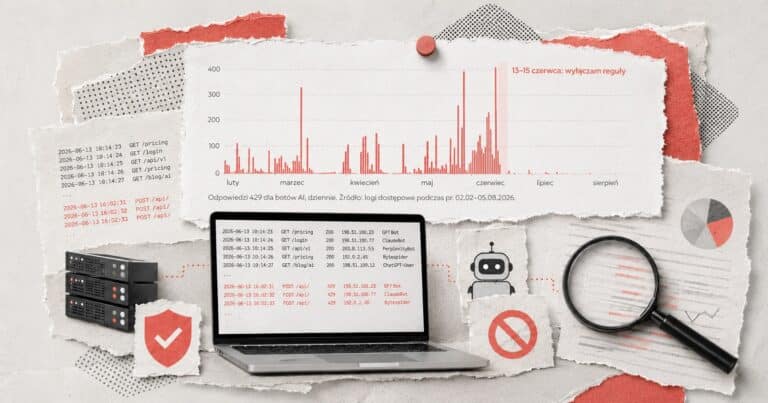
Drop a server log and see which AI bots visit, which come from confirmed IP addresses and which ones your server turns away. Your file stays on your computer.
Free tool
Is your site in Common Crawl?
Enter a domain to see how many pages CCBot saved in the last 6 crawls and whether anything blocks it.



Questions
Frequently asked questions
What is an AI model's cutoff?
A cutoff, or knowledge cutoff, is the time boundary of a specific model version's knowledge as declared by its provider. Later content lies outside that boundary, but it can still appear in an answer if the model fetches it from the web or receives it in the conversation, in a file or through a connector.
Knowledge cutoff and training data cutoff – what's the difference?
The knowledge cutoff marks the point through which a model's knowledge is most extensive and reliable. The training data cutoff is the broader boundary of the material used in training and can fall later. Anthropic publishes both values in its model documentation; other providers give a single date, which does not mean the two coincide – only that they are not reported separately.
How current is the data in ChatGPT, Claude and Gemini?
It depends on the model, not the product. In the GPT-6 family the freshest is Luna at 18 May 2026, Astra is at 30 April and Sol at 20 April 2026. In Claude the freshest are Opus 5.5 and Fable 5.1 at June 2026, while Sonnet 5 is at January 2026. Gemini 3.5 Flash-Lite and 3.6, 3.7 and 3.8 Flash declare March 2026, with the caveat that in some domains knowledge ends in January 2025; the other models in the 3 family, including 3.5 Flash and 3.1 Pro, are at January 2025. All of them reach for current information through Search Grounding. The full comparison is in the table above.
How does a knowledge cutoff differ from the data acquisition date in an AI Act summary?
A knowledge cutoff is the declared boundary of a model's knowledge of the world. The date in the training-data summary required by the AI Act is when the provider acquired the last data used for training, not necessarily data about current events. The second can fall noticeably later: GPT-6 Astra has a cutoff of 30 April 2026, while the latest data for its training was collected by 6 August 2026.
What is Microsoft Copilot's cutoff?
There isn't one. A combination of models from different providers runs underneath Copilot, and queries are sometimes routed between them automatically, so the boundary of knowledge depends on the product, the mode and which model answered. Copilot also draws on the Bing index, which lets it reach current information.
Which model has the freshest knowledge today?
Among models with a published cutoff, the freshest are Claude Opus 5.5 and Claude Fable 5.1 at June 2026. Next come GPT-6 Luna at 18 May 2026, and Claude Opus 5 and Grok 4.7 at May 2026. This is the state as of 26 September 2026 – the dates move with every model release.
Does a newer model always have fresher knowledge?
No. Release date and cutoff date are two independent quantities. Gemini 3.5 Flash came out in May 2026 with a January 2025 cutoff, meaning its memory closed sixteen months before release. GPT-5.1 had a fourteen-month gap. A version number is not an indicator of how fresh the data is.
Does a more expensive model have fresher knowledge than a cheaper one?
No again. In the GPT-6 family the cheapest model, Luna, has a cutoff of 18 May 2026, while the flagship Astra is at 30 April 2026, even though it costs a hundred times more per input token. A model's position in the price list says something about its capabilities, not about how far back its memory reaches.
Will a model tell me its cutoff if I ask?
A model's answer about its own specification is not a reliable source. Articles about earlier generations' cutoffs sit in its training data, so the model can reproduce someone else's date as its own. Check the provider's documentation for the specific model identifier. Google even recommends giving Gemini 3 Flash this date in its system instructions.
Does web access remove the cutoff problem?
Not entirely. In most systems search is a separate tool that has to be available in the given product, and it fires on only some queries. On the rest the model answers from memory, and its judgement of the sources it does find also rests on what it learned before the cutoff.
Why do different models answer the same question about my company differently?
One reason is different cutoff dates. A model cut off at January 2025 and a model cut off at June 2026 hold two different states of your brand in memory. On top of that come differences in whether and when each reaches for the web, and which sources it uses.
How long before my content reaches a model's memory?
There is no way to predict it, because providers publish neither their data collection schedules nor their criteria for selecting content into the corpus. All that is known is that the threshold is the next model version whose training covered that information, and that intervals between releases in 2026 run from a few weeks to a few months. Presence in the indexes of systems that fetch content live works faster and is the only layer you can genuinely influence in the short term.
Why do some models in the table have no cutoff date?
Because their providers don't publish one. Mistral, DeepSeek, Alibaba and the team behind Bielik describe their training corpora or architecture but give no boundary date. In those cases I write “not published” rather than estimating from the release date – and only after checking every place where the provider publishes documentation. Bielik gives data acquisition dates in the summary required by the AI Act, but not a knowledge boundary. Among open-weight models, Meta states the date directly in its model cards: August 2024 for Llama 4 and 4 January 2026 for Muse Glimmer. PLLuM gives an approximate period, and Google publishes dates in its model cards on deepmind.google rather than in the API documentation.
Sources: provider documentation and researchThe documents I checked the cutoff dates in. Check for yourself if anything raises a doubt.
OpenAI
Models – the API model catalog – cutoffs for GPT-6 Astra, Sol and Luna · All models – the full catalog including deprecated markings
Model pages with cutoff dates: GPT-6 Astra, GPT-6 Sol, GPT-6 Luna, GPT-5.6 Sol, GPT-5.5, GPT-5.4, GPT-5.3-Codex, GPT-5.2, GPT-5.1, GPT-5, GPT-4.1, o3, o4-mini, GPT-4o, GPT-4o mini
OpenAI changelog – release dates for GPT-6 Astra (3 September) and Sol and Luna (22 September 2026)
GPT-5.1: A smarter, more conversational ChatGPT – release date, 12 November 2025
Retiring GPT-4o and other ChatGPT models – retirement dates from ChatGPT and continued API access
Anthropic
Models overview – reliable knowledge cutoff for current models
Model pages: Sonnet 4.6, Opus 4.6, Opus 4.5, Sonnet 4.5 and the legacy model guide – reliable knowledge cutoff, training data cutoff and release dates
Transparency Hub – Model Report – release dates and the statement that Mythos 5.1 and Fable 5.1 are the same model; for Sonnet 4.6 a different cutoff than in the model documentation
Claude Opus 5.5 – release date, 22 September 2026
Redeploying Fable 5 – suspension of access to Fable 5 and Mythos 5 (12 June 2026), lifting of the export controls (30 June) and restoration of access (1 July)
Google
Google DeepMind model cards – cutoff dates for individual models; 3.8 Flash, 3.6 Flash, 3.7 Flash and 3.5 Flash-Lite declare March 2026 with the January 2025 caveat for some domains
Gemini 3 Developer Guide – the January 2025 declaration for the whole 3 family, not broken down by model
Release notes – releases of the 3.8 models and restricted access to the 2.5 family
Gemini deprecations – shutdown of gemini-2.0-flash on 1 June 2026, status of the 2.5 models (not deprecated, no shutdown date) and release dates for the 3 family
Vertex AI – Gemini 2.5 Flash-Lite – an example of the third place where Google publishes cutoff dates
Firebase AI Logic – supported models – cutoff dates for the 2.5 family and Gemini 2.0 Flash
Gemini API – Gemini 2.0 Flash – August 2024 cutoff, conflicting with Firebase AI Logic
Vertex AI – Get started with Gemini 3 – the recommendation to give the cutoff in the system instructions
SpaceXAI (xAI)
Grok 4.7 – May 2026 cutoff on the current model page
Models – the caveat about no access to current events without search tools enabled
SpaceXAI API – models available in the API: Grok 4.7, 4.6 and 4.5
Release notes – release of Grok 4.5 (8 July 2026)
Introducing Grok 4.7 – release date, 21 September 2026
Microsoft
Microsoft Copilot – overview – a combination of models from different providers and automatic query routing
Meta
Llama 4 – model card – August 2024 cutoff
MODEL_CARD.md in the meta-llama repository – the same date in the data freshness description
Muse Glimmer 30B – model card – 4 January 2026 cutoff
Mistral
Mistral Large 3 model card – release date and parameters, no cutoff
Mistral Medium 3.5 model card – release date, no cutoff
Legal Center – Mistral Medium 3 – version release dates, no cutoff
Does Mistral disclose its training datasets? – the statement that training data is not disclosed
Models Overview – overview of the family
DeepSeek and Qwen
DeepSeek-V4-Pro – model card – corpus and architecture, no cutoff
DeepSeek-V4.1-Flash – model card – architecture, no cutoff
Qwen3.8-27B – model card – architecture and context, no cutoff
Discussion about the cutoff under the Qwen3.8 repository – no answer from the provider
Polish models
Bielik-11B-v3-Base – model card – corpus description and the Mistral 7B v0.2 base model, no boundary date
Bielik 11B v3 – technical report – corpus sources, no date
Bielik-11B-v3.0-Instruct – model card – instruction dataset, also no date
Bielik-4.5B-v3 – model card – corpus and the Qwen 2.5 base model, no date
PLLuM-12B-base-250801 – model card – data up to early 2025
pllum-12b-nc-instruct-250715 – model card – data up to autumn 2024
PLLuM – project site – description of data sources
AI Act – training-data summaries
European Commission – Explanatory Notice and Template for the Public Summary of Training Content – the official summary template, including the field for the latest date of data acquisition
OpenAI – Public Summary of Training Content for GPT-6 Astra – crawled data collection period (GPTBot section), data acquisition date and date of placement on the EU market
SpeakLeash – Bielik 11B v3 EU Public Summary – the Bielik v3 11B Instruct model; data acquired until May 2025, public datasets until November 2025
What the EU AI Act's Training-Data Summaries Do and Don't Reveal and EU AI Act Article 53 Training-Data Summaries: Who Filled the Template – compilations of who filled in the template
Research
Cheng J., Marone M., Weller O., Lawrie D., Khashabi D., Van Durme B., Dated Data: Tracing Knowledge Cutoffs in Large Language Models, arXiv:2403.12958 – definition of the effective cutoff, the estimation method and an analysis of the causes of divergence; Outstanding Paper at COLM 2024
Repository for the paper – code and data
Award announcement – Johns Hopkins University
Comparative compilations
llm-knowledge-cutoff-dates – an open repository with links to primary sources, used only as a starting point for verification
All links checked on 26 September 2026. Entries marked “not published” have no declaration from the provider, and I don't guess them from the release date. For Gemini models the dates come from Google DeepMind's model cards, which are a separate source from the API documentation. I only mark a date as “not published” after checking every place where the provider publishes documentation.
History of this page 26 Sep 2026 – added: the GPT-6 family, Grok 4.7 and 4.6, Claude Opus 5.5, Fable 5.1, Mythos 5.1 and Mythos 5, Gemini 3.6, 3.7 and 3.8 Flash, Muse Glimmer 30B, Qwen 3.8 and DeepSeek V4.1 Flash. Corrections to values from the previous version: Gemini 3.6 Flash and 3.5 Flash-Lite show March 2026 in their model cards (previously “not published” and January 2025 respectively); PLLuM gives an approximate data range in its model cards. New marking for conflicting provider sources: Claude Sonnet 4.6 and Gemini 2.0 Flash. Added a section on AI Act training-data summaries.
6 Aug 2026 – first version.
Timeline of changes at providers 22 Sep 2026 – release of GPT-6 Sol and GPT-6 Luna; Claude Opus 5.5 released the same day. Google made Gemini 3.8 Flash TTS and 3.8 Flash-Lite TTS available.
21 Sep 2026 – release of Grok 4.7.
18 Sep 2026 – Google restricted access to Gemini 2.5 models in the Gemini API to existing users; the models are not deprecated and have no shutdown date.
15 Sep 2026 – release of Gemini 3.8 Live.
10 Sep 2026 – release of DeepSeek V4.1 Flash; since 14 Sep 2026 it also serves requests sent to V4 Pro.
3 Sep 2026 – release of GPT-6 Astra, initially with limited access; published together with its AI Act training-data summary.
2 Sep 2026 – release of Gemini 3.8 Flash.
September 2026 – release of Claude Fable 5.1 and Claude Mythos 5.1.
14 Aug 2026 – release of Qwen3.8-27B, two days after Qwen3.8-2.4T-A95B.
13 Aug 2026 – release of Gemini 3.7 Flash.
12 Aug 2026 – release of Grok 4.6.
10 Aug 2026 – release of Muse Glimmer 30B, Meta's open-weight model with a 4 January 2026 cutoff.
2 Aug 2026 – the AI Office gained the power to enforce the obligation to publish training-data summaries.
21 Jul 2026 – release of Gemini 3.6 Flash and 3.5 Flash-Lite, whose model cards give a March 2026 cutoff.
1 Jul 2026 – Fable 5 returns for all users, Mythos 5 for selected US organisations; the export controls were lifted on 30 June.
12 Jun 2026 – Claude Fable 5 and Mythos 5 switched off as a result of US export controls.
1 Jun 2026 – Google shut down
gemini-2.0-flash and gemini-2.0-flash-001 in the Gemini API.19 May 2026 – release of Gemini 3.5 Flash with a January 2025 cutoff.
11 Mar 2026 – OpenAI retired the GPT-5.1 models from ChatGPT, keeping API access.
13 Feb 2026 – OpenAI retired GPT-4o, GPT-4.1, GPT-4.1 mini, o4-mini and GPT-5 from ChatGPT.
Next steps
Not sure what AI models say about your brand today?
Checking which systems know you, which sources they cite you from and where the boundary of their knowledge about you runs is part of my AI visibility audit. If you'd rather start with a conversation, get in touch.