

The longer an algorithm has to wait for the main answer in your text, the higher the risk it never gets there at all. The content can be good, but the problem sits elsewhere: in the cost of acquiring it. Enter BLUF – a mechanism with a military pedigree.
What is BLUF and where does it come from?
BLUF – Bottom Line Up Front – is the report-writing standard of the United States Army. The rule is simple: conclusion first, justification second. Nobody has time to read to page three of a report to find out what the report concludes.
BLUF – Bottom Line Up Front
A written-communication principle originating in the US Army, in which the main conclusion or recommendation appears at the very beginning of a document, before the justification and context. The goal is to shorten the time the recipient needs to make a decision or act.
Classic European writing usually does the opposite: first you build context, walk the reader step by step through the arguments, and the conclusion arrives at the end as a reward for their attention. The essay format I remember perfectly from my school-leaving exams. That model of persuasion comes from Greek rhetoric and works beautifully – if your listener is in no hurry. A commander in the field is in a hurry. So is an algorithm.
BLUF migrated from the army to the corporate world. Barbara Minto – the first woman with an MBA hired by McKinsey – codified an analogous rule during her time at the firm as the Pyramid Principle: main thesis first, then the arguments, data last.
Minto worked independently of the army, but arrived at the same conclusion: the recipient processes information from the top down, not from the bottom up.
Today the Minto Pyramid Principle and BLUF are often used interchangeably, and they’re the standard for emails and documents in every organization that respects its people’s time.
And then the LLMs arrived. And BLUF stopped being a matter of corporate etiquette. It became a matter of visibility.
Cost of retrieval – what does it mean in practice?
Cost of retrieval is the price an AI system has to pay to extract useful information from a document. The higher the cost, the lower the chance the document gets used as a source for an answer.
Cost of retrieval
The cost (time, compute, matching precision) an AI system must incur to extract useful information from a document. The higher it is, the lower the chance the document gets selected as a source for the answer.
An LLM doesn’t read an article the way a human does – and we keep forgetting that. The system retrieves passages, specific fragments of a document, and judges whether they match the query. A text that opens with generalities starts from a worse position in that selection – its semantic signal is simply weaker.
The same applies to language models with web access. RAG (Retrieval-Augmented Generation) is a mechanism in which the model first decides what to retrieve, and only then generates the answer. The retrieval decision is made on first signals. A text that opens with a lengthy preamble sends none.
RAG systems don’t retrieve whole articles – before searching, they cut documents into smaller fragments, so-called chunks, and evaluate each one separately. If a paragraph’s thesis arrives at its end, a fragment that opens with warm-up can be discarded before the algorithm ever reaches the point. Writing in BLUF, you make sure every chunk is understandable on its own – even torn out of the middle of the text.
Chunk vs passage — what’s the difference?
A chunk is a text fragment extracted automatically by a RAG system before the search process. The algorithm cuts a document into chunks of a set length and evaluates each independently, with no knowledge of the neighboring fragments’ context.
A passage, in turn, is a document fragment selected by the AI system as a potential answer to the query. An LLM doesn’t cite pages as wholes – it picks specific passages that best answer the user’s question. A chunk that opens with “warm-up” instead of a thesis rarely becomes a passage.
BLUF and query fan-out. Every paragraph sits a separate exam
In classic search, the algorithm judged your article once – as a whole, or as a single passage matched to a query. One chance, one first sentence, one moment of selection. Generative search systems change that math quite radically.
When you type a question into Google AI Mode, ChatGPT with web access or Perplexity – the system doesn’t send one query and wait for the result. It decomposes your question into a series of sub-queries and runs them in parallel. Google calls this query fan-out – Liz Reid, VP Head of Search, described the mechanism officially at the launch of AI Mode in May 2025.
Modern generative search tools apply the same pattern. ChatGPT performs on average two searches per web-enabled query, in some categories even three. One user question spawns several, a dozen, sometimes dozens of independent search paths. And each of them lands on different fragments of your text.
What does this mean for BLUF? That the “answer up front” rule stops applying to one intro – it applies to every paragraph. Every chunk is a potential entry point for a separate sub-query. Each undergoes its own cost of retrieval evaluation. A fragment that opens with context instead of a thesis drops out of one fan-out path – and that path goes to a competitor.
Picture an article about building a personal brand as a consultant. A user types into ChatGPT or Google AI Mode: “I’m an HR consultant with 10 years of experience, I’ve left the corporate world and want to be visible as an expert – where do I start?“
The system breaks it into sub-queries: expert positioning, content strategy, visibility in trade media, LinkedIn profile, first steps in personal branding. Five paths, five moments of selection, five chances to be cited – or five moments where your text drops out, because the chunk opened with scenic warm-up.
An article whose LinkedIn section opens with “LinkedIn is a platform that has been changing dynamically for years…” will most likely lose to a section that opens with “LinkedIn appears as a source in ChatGPT more often than most industry websites“. The first sentence either answers the sub-query or is invisible. Multiplying fan-out paths multiplies both the chances and the risk.
💡 A practical rule
Wrote an article with five sections? In the query fan-out era that’s not one text in five parts. It’s five separate candidates for citation. Each has to pass the BLUF test independently of the others – because the algorithm evaluates them independently of each other.
This is also why topical authority and BLUF work so well together. Depth of topic coverage – many sections answering specific questions – gives you more chunks that can catch subsequent fan-out paths. But only when each of them opens with an answer. Breadth without BLUF is more material to skip. Breadth with BLUF is more material to cite.
The three levels of BLUF in a text
Level 1: the whole article
The first 100 words must contain the main answer to the question the article poses. Not an announcement. Not a promise. The answer.
The classic intro: “Building a personal brand is one of the biggest challenges facing experts today. In this article, I’ll walk you through how algorithms interpret your content and why it matters for your visibility.”
The BLUF version: “AI algorithms skip content that opens with context instead of an answer. I’ll show you how to fix that in three steps.”
The first version merely describes what will be. The second simply is.
Level 2: the section
Every section should have a heading that is a claim – not a question, not a topic. “What is topical authority” is a topic. “Topical authority decides whether you get cited” is a thesis.
The algorithm treats headings as separate semantic signals. If the heading carries no information – the passage beneath it starts from a worse position.
What about question headings?
A question heading is a deliberate rhetorical choice – it builds tension and pulls the reader in. There’s one more argument in its favor: users type questions into search engines, not claims, so a heading phrased as a question can match the keyword better and attract organic traffic. The cost is singular: the algorithm treats such a heading as a weaker semantic signal during passage selection – and it’s worth knowing you’re paying it.
Level 3: the paragraph
The first sentence of a paragraph is its BLUF. If that sentence is warm-up, the paragraph is barely citable.
Before: “Many people wonder whether it’s worth investing time in building a LinkedIn profile. The answer isn’t simple, because it depends on the industry. Nevertheless, studies show that…”
After: “LinkedIn increases visibility in LLMs – a March 2026 Semrush study showed a LinkedIn profile appears in ChatGPT’s sources more often than most industry websites.”
The same information. A different order. A different result in RAG.
BLUF and the human reader
BLUF is not a trade-off between readability for humans and optimization for AI. NNGroup’s eye-tracking research – 232 users, thousands of pages – shows the same pattern consistently: readers scan the top band of the page, then the left column, pausing on the first words of paragraphs. The algorithm does the same – only faster, and without a second chance.
What does this change for an expert’s personal brand?
An expert who writes in BLUF is more citable by AI and more readable for humans. But they’re also perceived differently – as someone who respects the recipient’s time. That’s a signal of competence, not just technique.
The reverse rule works too. A text built on the “earn the conclusion” style – where the answer arrives only after three paragraphs of tension-building – can be beautifully written and still uncited. Because the algorithm abandoned it at the retrieval stage, before it ever reached the point.
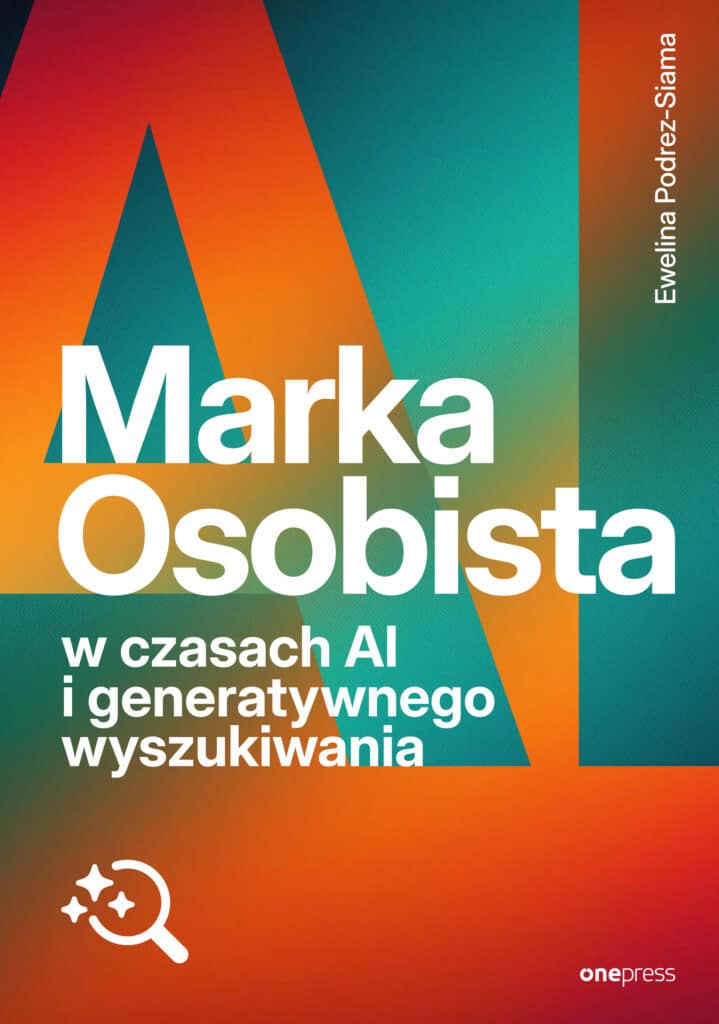
Book · currently in Polish
Marka osobista w czasach AI i generatywnego wyszukiwania
Algorithms stopped looking for keywords. They’re looking for you — and they’ll either understand you or skip you. The full playbook of writing and building a brand for the generative search era is in my book (Onepress/Helion, June 2026). The mechanisms, in English, live on this blog.
About the book →An expert’s personal brand is not only what you write. It’s also how quickly a system – and a human – can figure out what you do and what you know. Both start with the first sentence.
The lower the cost of retrieval of your content, the higher the chance you get cited. And the higher the chance that someone who lands on your text for 30 seconds will know what they learned from you.
BLUF as a principle, not a dogma
BLUF works best as a habit, not a rule without exceptions. A question heading builds tension and draws attention – that too is a legitimate rhetorical choice. An intro that walks the reader through context can be necessary when the topic needs grounding. The BLUF question isn’t “did I open with the answer?” but “can the algorithm – and the human – find the answer without searching for it?”
3 questions before you publish your next text
- Do the first two sentences contain the main answer? Not an announcement, not context – the answer?
- Is every heading a claim that could stand alone as a sentence?
- Can the first sentence of every paragraph be torn out of context and still hold up?
If the answer to any of these is “no”, consider rewriting one sentence – usually the first. And that’s enough.
When does BLUF fail?
BLUF is a tool for written, informational communication — not for every conversation. In direct human contact, especially where emotions are involved, “conclusion first” can land brutally. Feedback for a team member, a difficult conversation, a moment that requires building psychological safety — these are situations where context and the relationship come before the thesis. I teach this in my feedback and team-communication trainings, too. The algorithm, by design, has no feelings. People do.
Bibliography
- Department of the Army. Army Regulation 25–50: Information Management – Preparing and Managing Correspondence. Washington, DC: Headquarters, Department of the Army, 2020. armypubs.army.mil
- Minto, B. The Pyramid Principle: Logic in Writing and Thinking. Minto International, 1981; Pearson/Financial Times ed., 1987. Canonical ed.: The Minto Pyramid Principle: Logic in Writing, Thinking and Problem Solving. Minto Books International, 1996.
- Nielsen, J. “F-Shaped Pattern For Reading Web Content.” Nielsen Norman Group, April 16, 2006.
- Pernice, K. “F-Shaped Pattern of Reading on the Web: Misunderstood, But Still Relevant.” Nielsen Norman Group, 2017.
- Semrush. “We Analyzed 89K LinkedIn URLs Cited in AI Search: Here’s What Drives Visibility.“, March 2026.
- Search Engine Land. ChatGPT performs a search in 31% of prompts, new data reveals, October 2025.
