
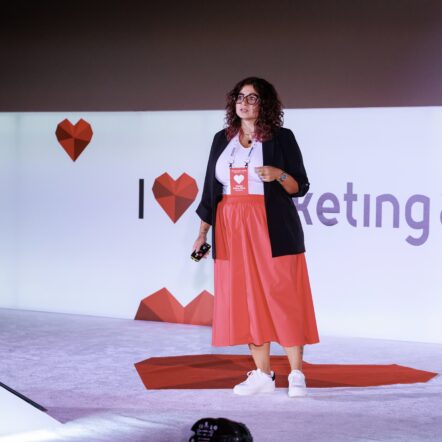
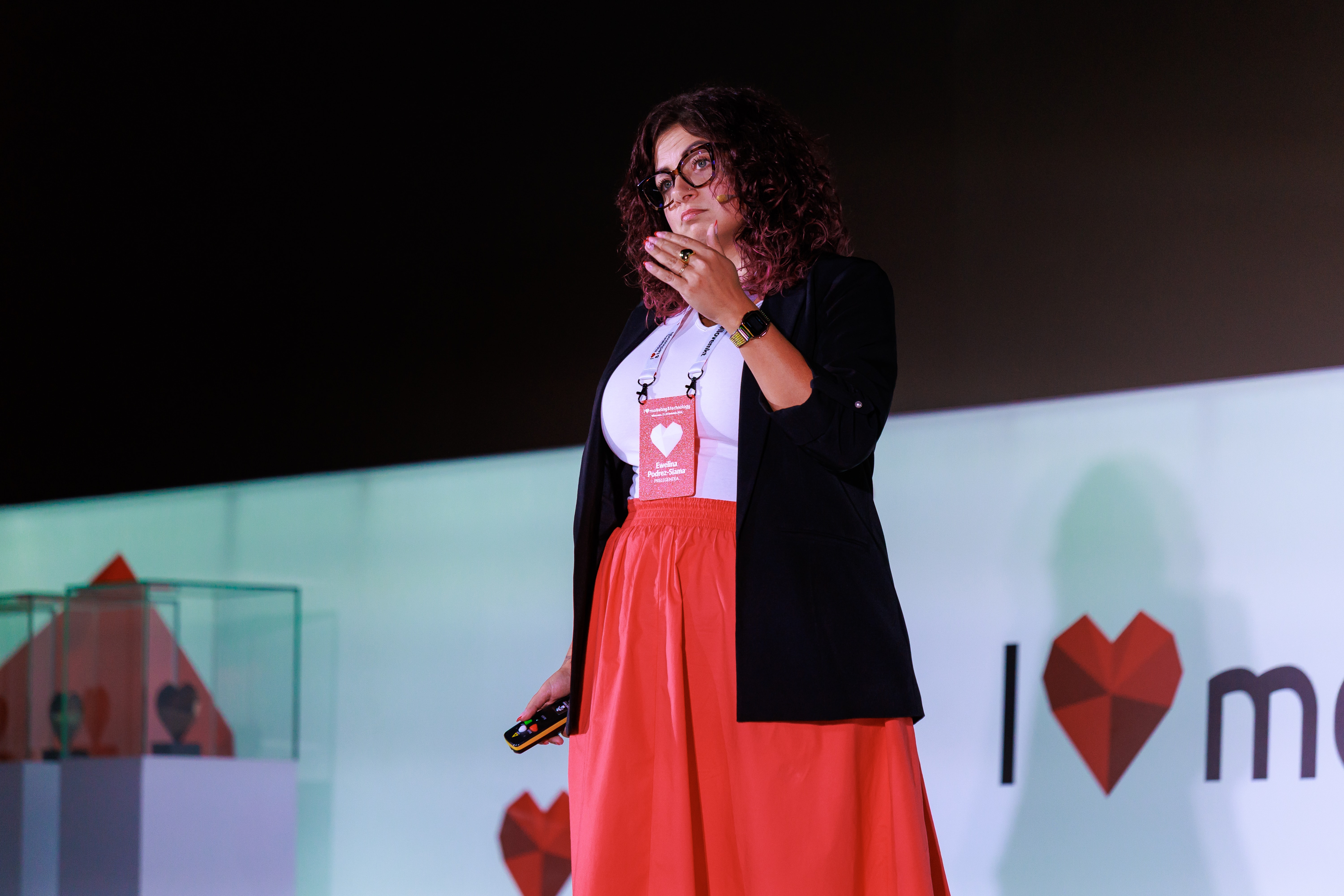
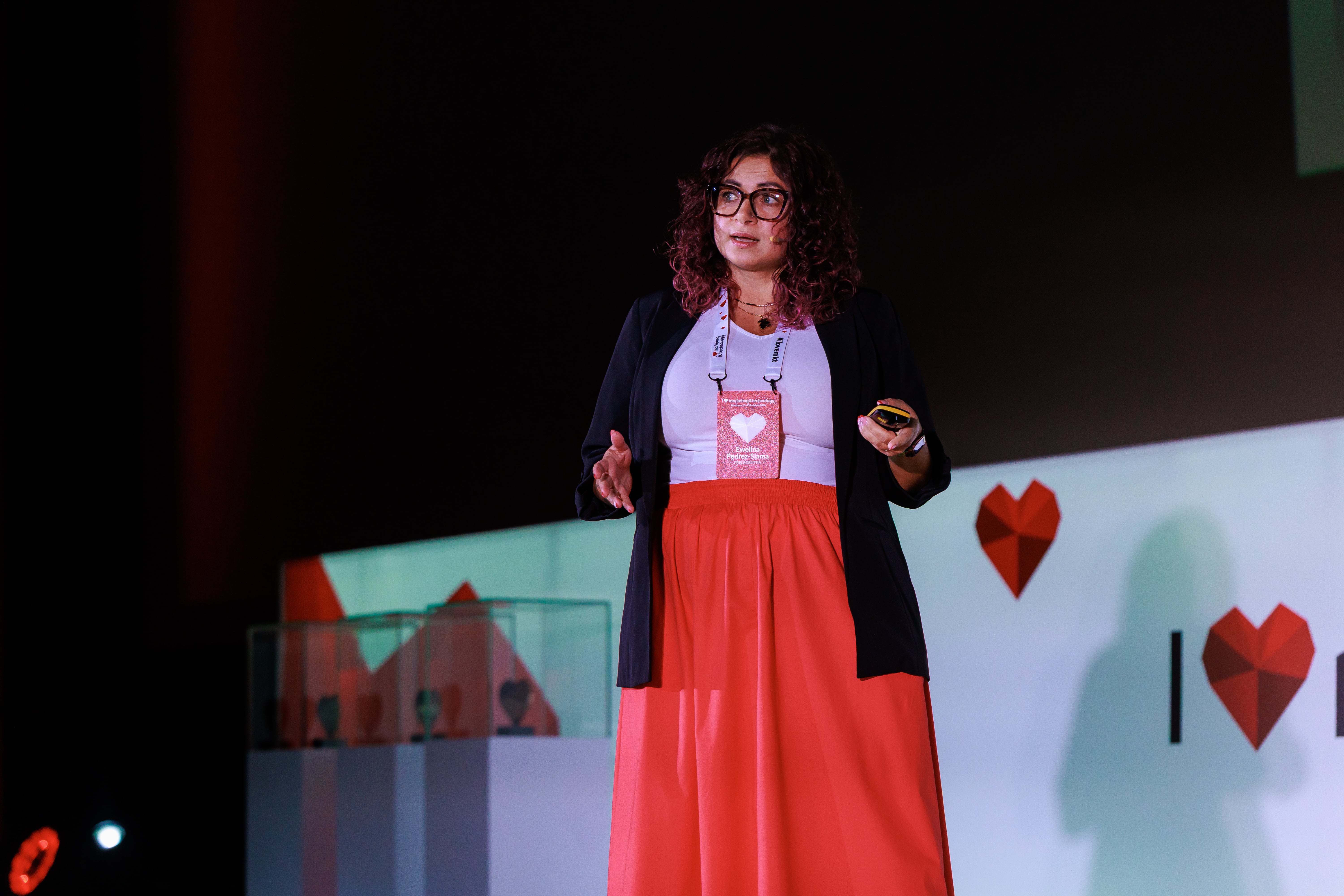
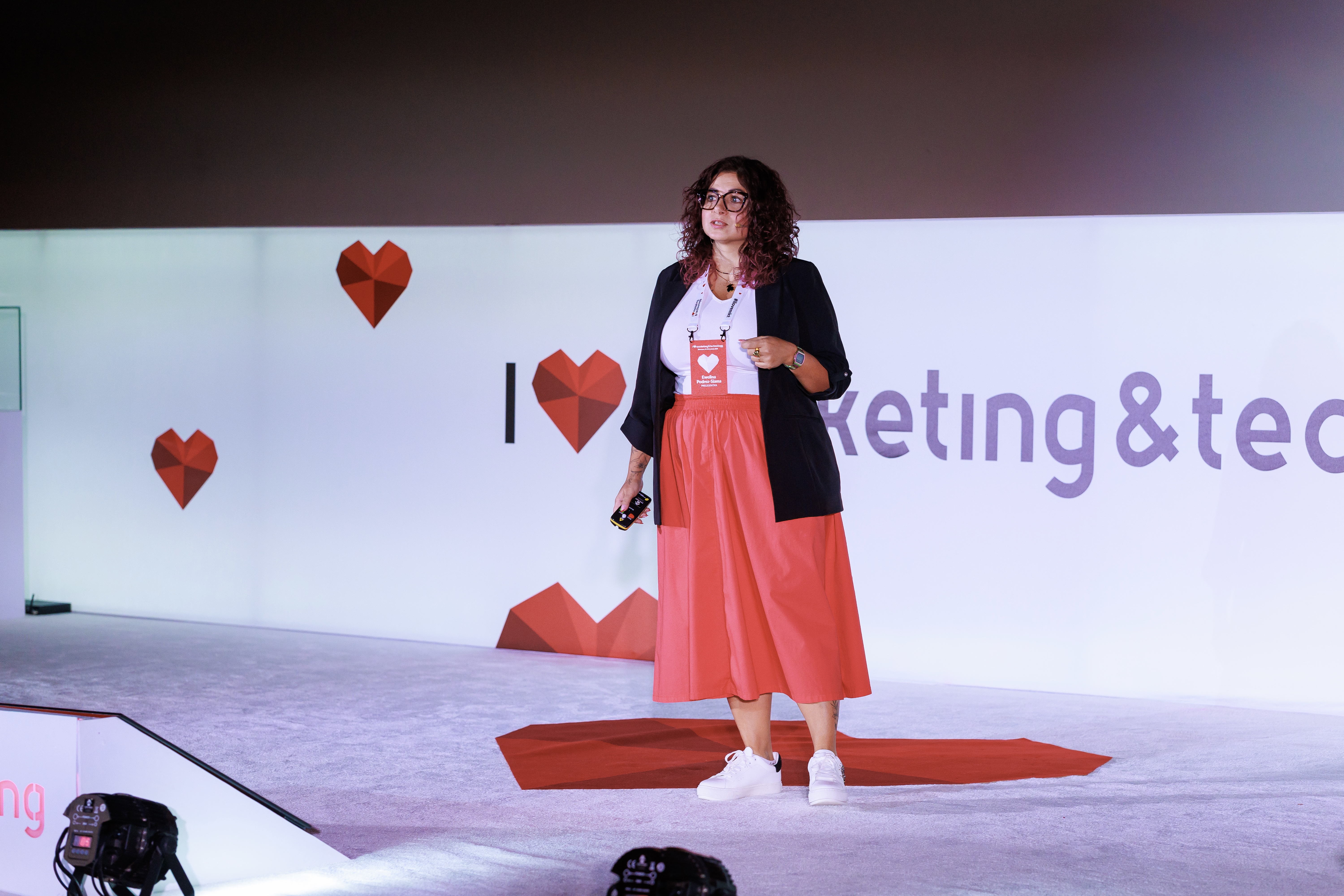
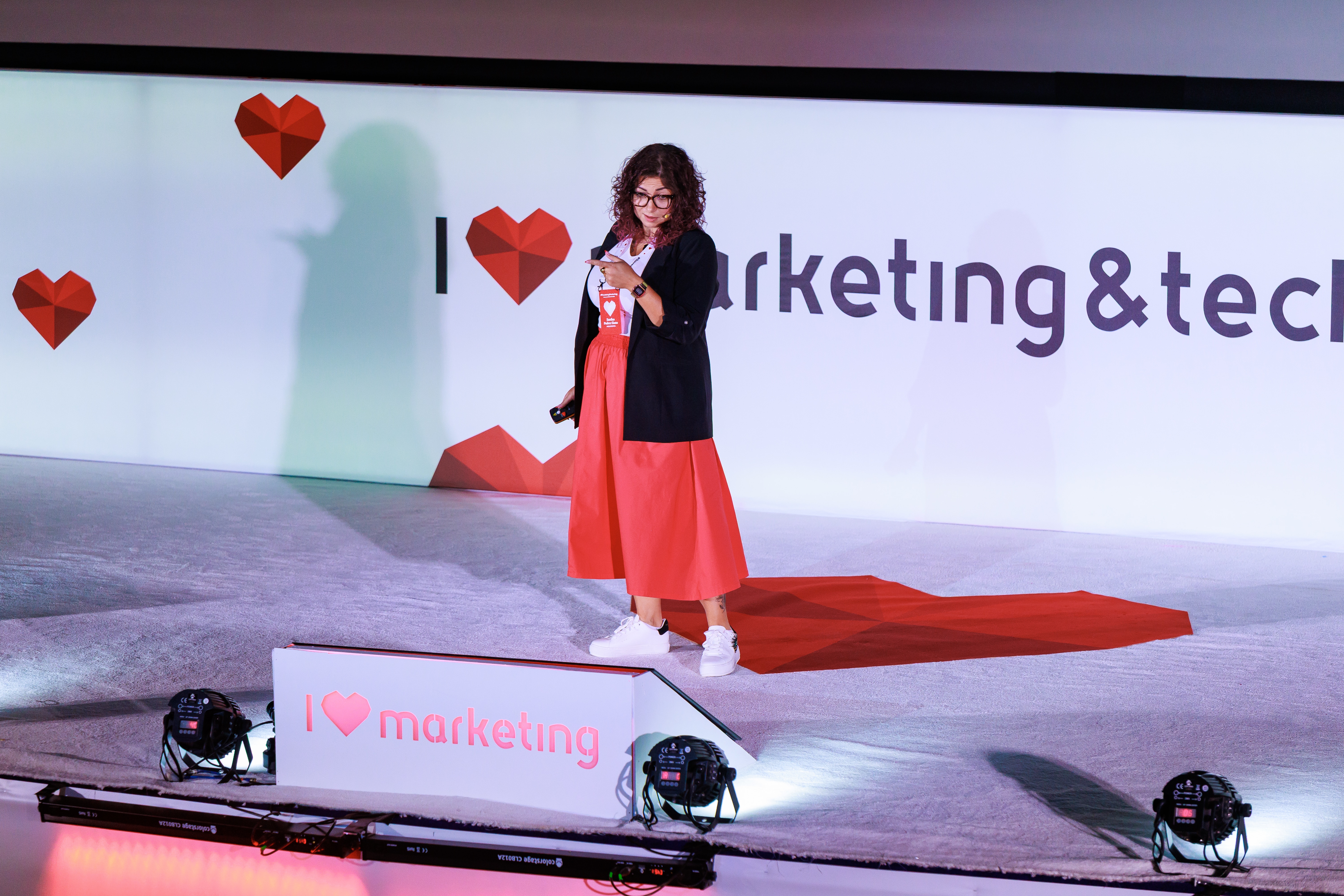
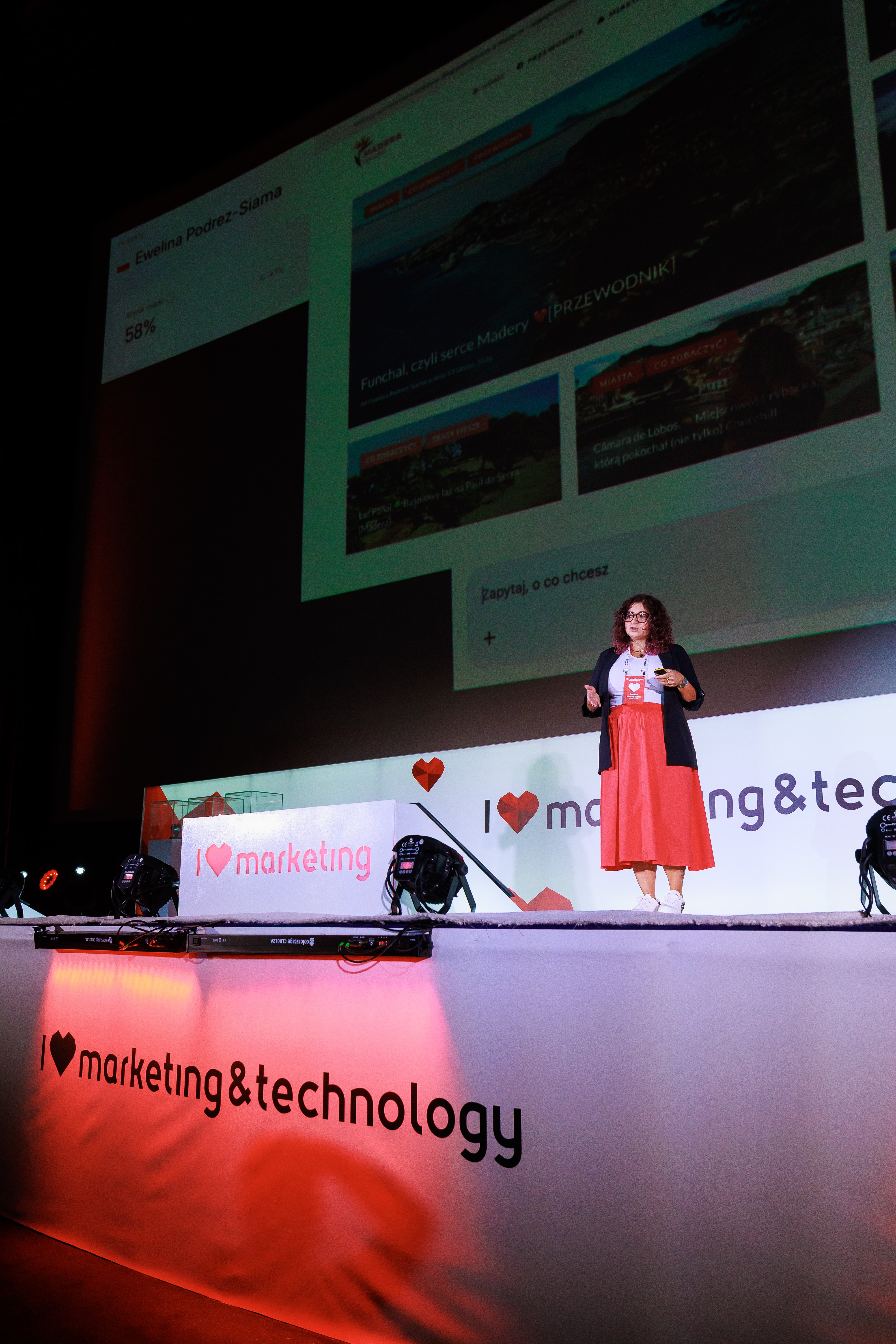
This post expands on my talk from I♥Marketing & Technology 2026, one of Poland’s largest marketing conferences, on building a personal brand in the era of generative search and language models.
You’ll learn, among other things:
- what an entity is in the context of a personal brand,
- how Google’s Knowledge Graph and LLMs identify people and brands,
- how to check your own resultScore in the Knowledge Graph API,
- what Trust Halo is and how the authority of an entity transfers to new projects,
- what Google’s patents (US12321706B2, US20180046717A1) and the Google Content Warehouse API leak mean for your personal brand.
You’ll also find supplementary materials for attendees here, including an 8-step checklist for building an entity, an interactive resultScore calculator, the source patents, and links for going deeper.

Your personal brand in AI. When the systems don’t know who you are…
Not long ago, in the eyes of AI, I was at best a more or less random string of characters. Which means I could have been one person, I could have been five, I could have been a million.
Entrepreneur.
SEO specialist.
Keto blogger.
Author.
Travel blogger.
And now AI, too…
and we’ll probably add something else next week 😉
Some will call it versatility. Others, fragmentation. A third group will deliver an internet-diagnosed case of ADHD. And still others will laugh that I have to turn everything into a business. And you know what? Every one of them is right.
The problem is that, to the algorithms, this is chaos. And chaos doesn’t become a brand.
Jeff Bezos once said:
“Your brand is what other people say about you when you’re not in the room.”
You know this one well, don’t you? And Bezos is undeniably a smart man – but what if I told you that today his line should read:
“Your brand is what the systems can reconstruct about you, without your help.”
The catch is this: if the system doesn’t know who you are, you don’t have a brand.
Building a brand isn’t overproducing content
How have you pictured brand-building online so far? You’re out there on the internet, making content in the broadest sense, right? A few years ago, that’s what I thought too. But I have bad news: that isn’t building a brand. That’s overproducing content. And to understand how to build an online identity instead of overproducing, you need to grasp one more thing.
The answer to the question of your identity is… the ENTITY of your personal brand
Do you know what connects:
- an IKEA bookcase,
- Coca-Cola,
- me,
- the Doge meme dog,
- and I♥Marketing?
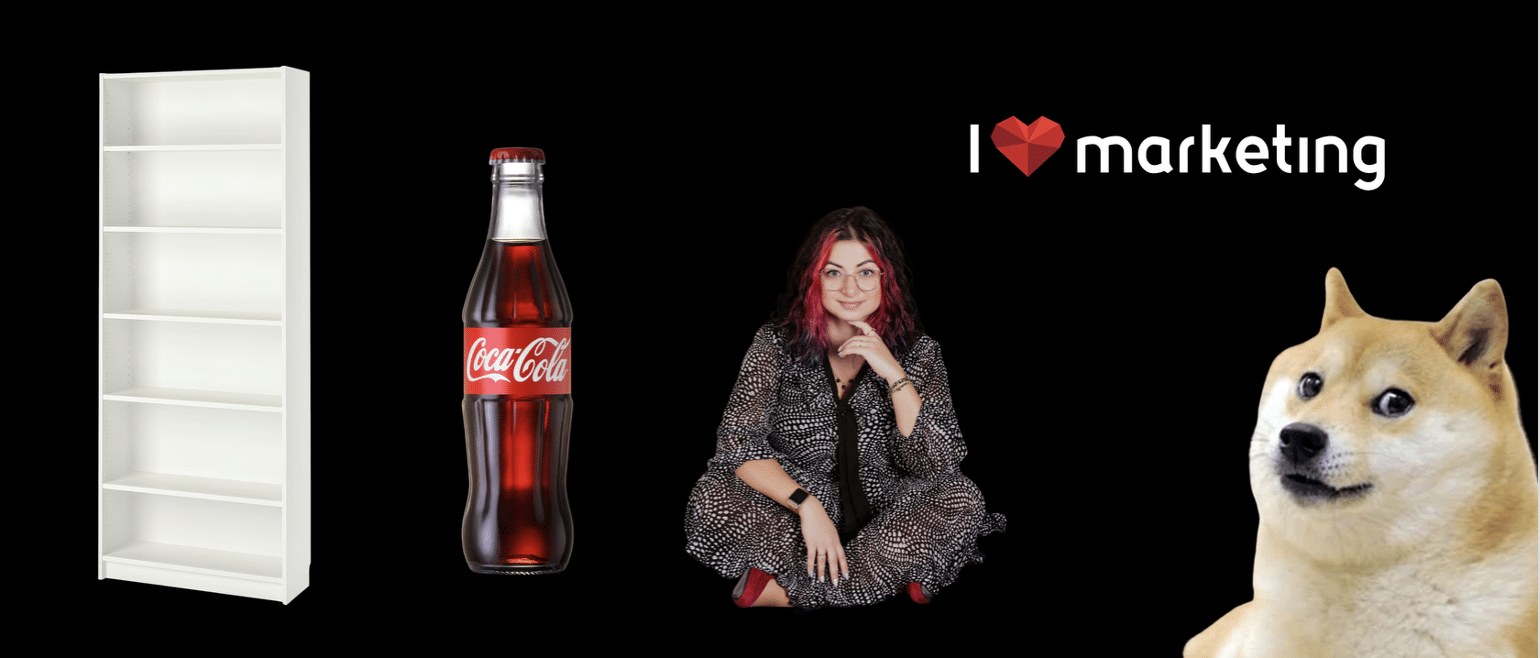
Each of them is an entity. A recognizable, distinct object to which the system assigns attributes, relationships, and context.
The IKEA bookcase is the Billy model. When you search for Billy, Google won’t first offer you Billy Idol – it’ll offer you that IKEA bookcase. Don’t believe me? Check it.
LLMs behave the same way: ask about Billy without setting any prior context, and they’ll explain that you probably mean the iconic bookcase.
An entity is something a system can unambiguously recognize. A person, a brand, a thing. Kabosu the dog. You’re an entity too. Or at least you should be. And how to be one is exactly what we’re going to talk about now.
Rule 1: The system doesn’t remember what you do. It remembers what you appear alongside.
The first question you should ask yourself is no longer “am I visible in Google.” It’s: does the system even know who I am?
Two years ago, my answer (translated from LLM into human) was: not really…
I’d been on the internet for years. Well over a decade. I wrote content, recorded courses, podcasts, webinars. I built companies. I wrote books.
And yet the algorithms saw my name in very mixed company: other SEO specialists, cookbook authors, bloggers, influencers, conferences, and assorted brands.
And unfortunately, the systems didn’t know whether this was one and the same person or a coincidental clash of names.
To them, “Ewelina Podrez-Siama” was a sequence of characters – in system language, a string. And a string is not an entity.
A bleak picture when you’ve been building a career since 2009, isn’t it?
To fix it, I did a lot of things. But one was the breakthrough: Wikidata.
Evidence, not declarations
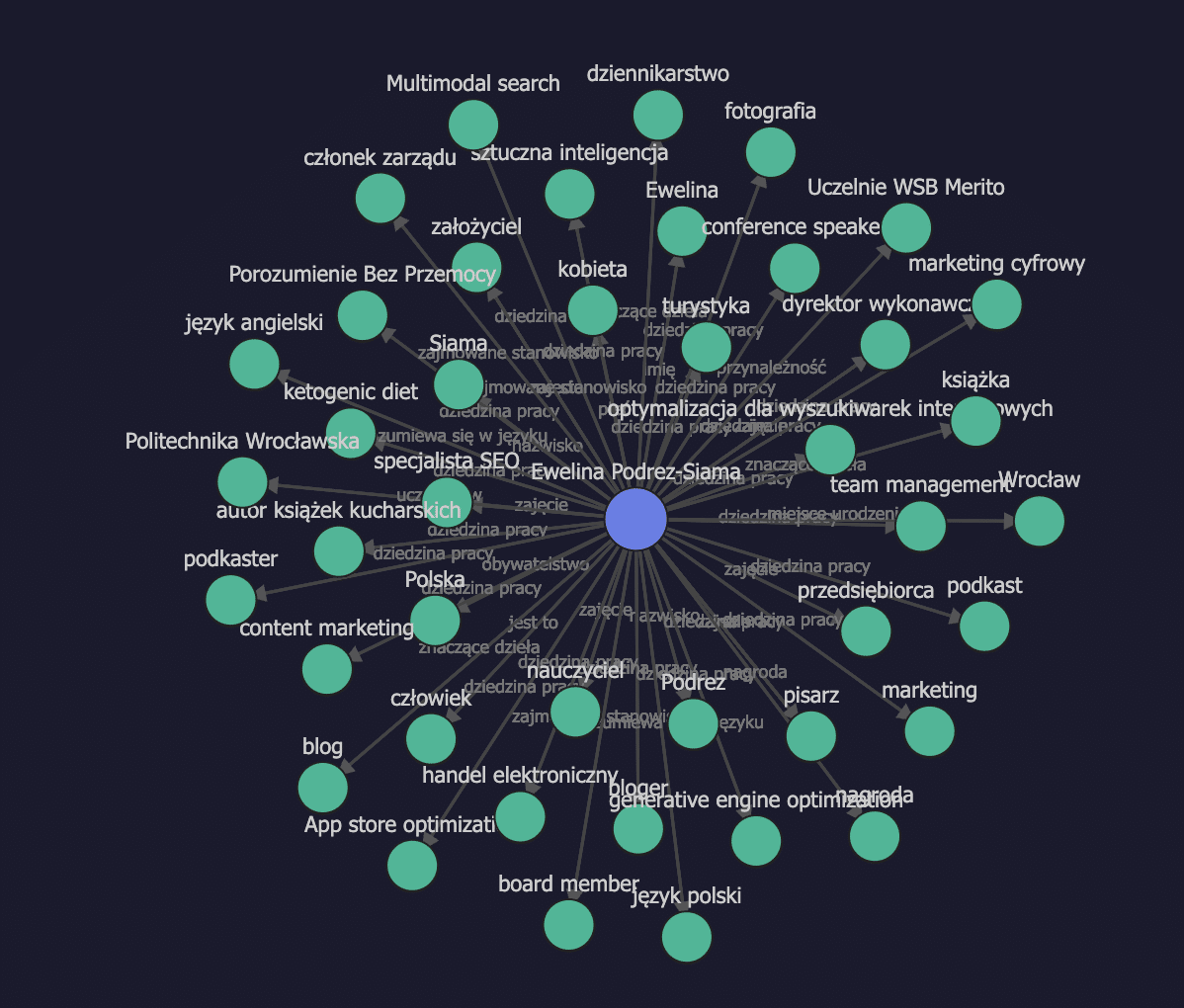
Wikidata is a database of facts that systems understand: who did what, and what they’re connected to. To put it loosely, it’s a kind of Wikipedia in the language of AI.
I added my profession there. Publishers. Business partners. Books with their ISBNs. Awards. In other words, external, independent evidence of my existence – not my own declarations.
From a string of characters with no connections, I presented the systems with… coherence and a legible graph of my relationships.
I didn’t change the content. I didn’t produce anything new. I only changed how the systems see me.
I could now go on about how my results in AI Overviews shifted within days. How successive post-training versions of LLMs started recommending me and citing my site. How my travel blog, launched in mid-February, racked up 4,000 clicks from search in seven weeks – a result of the trust transferring to the entity. I call this effect Trust Halo.
But let’s slow down. AI’s favor is a fickle thing. So instead of dwelling on isolated results, I’d rather focus on the certainties and the facts.
Wikidata isn’t a whim
Systems have used Wikidata for years. What’s more, Google patented a way to add knowledge to an AI model without retraining it (patent US12321706B2, granted in June 2025). The data source in the experiments was… Wikidata. More than 23 million knowledge triples describing 1.1 million entities.
If you take one thing away from this post:
Gather and organize external evidence of your existence, and try to get into Wikidata.
Wikidata isn’t Wikipedia. The barrier to entry is lower, and indexing by Google and LLMs is direct. Didn’t work the first time? Read the editors’ notes and keep trying until it does.
Read also: Wikidata step by step – how to get into the database Google trains language models on.
Rule 2: The system isn’t looking for keywords. It’s looking for an answer: who are you?
The system’s certainty about your identity is measurable. Picture a map. Not a road map – a map of meaning. The points: people, companies, places, concepts. Between them, connections:
- …works at…,
- …is the author of…,
- …specializes in…
The more coherent, confirmed connections there are, the more certain the system is that it knows who it’s dealing with. And the stronger your point on the map of meaning.
This isn’t just theory – Google really does build such a map. It’s called the Knowledge Graph. And you can check how strongly the system matches your name to an entity in that graph.
resultScore – your score on the map of meaning
For a Polish-language query, my score was 12 before I organized the entity. I wasn’t a point on the map of meaning. After I completed the Wikidata entry, the first jump – to 43 – showed up within 11 hours (February 2026). The next, to 97.4, within a few weeks. Since then it fluctuates between those two good scores (which is natural in the “life cycle” of an entity).
You might be wondering now whether 97 is a lot. It’s enough for a knowledge panel to display for my entity in Google. And for me to become, in the systems’ eyes, a single person. Finally.
That said, with resultScore the sky is the limit. Taylor Swift, for example, has a score of over 24,000.
The question for you is this:
Is your personal brand a point on that map of meaning? Are you the Taylor Swift of your industry, or more of a blank page?
The answer is your resultScore in Google’s Knowledge Graph. Below you’ll find a guide on how to check it, and a calculator to interpret the result.
How to check your resultScore in the Knowledge Graph API
resultScore is a query-match score: it shows how well an entity in Google’s knowledge graph matches the query you enter (it’s not a rating of the person). A higher score for your name means a more confident match – not that you rank better in results. You can check it for free, without any SEO tools.
Enter your score and see what it means
And what about LLMs?
LLMs work differently, but the consequence is similar: if they have a coherent picture of you, they’ll reconstruct it. If they don’t, they’ll start guessing, hallucinating, or – worse – mistaking you for someone else.
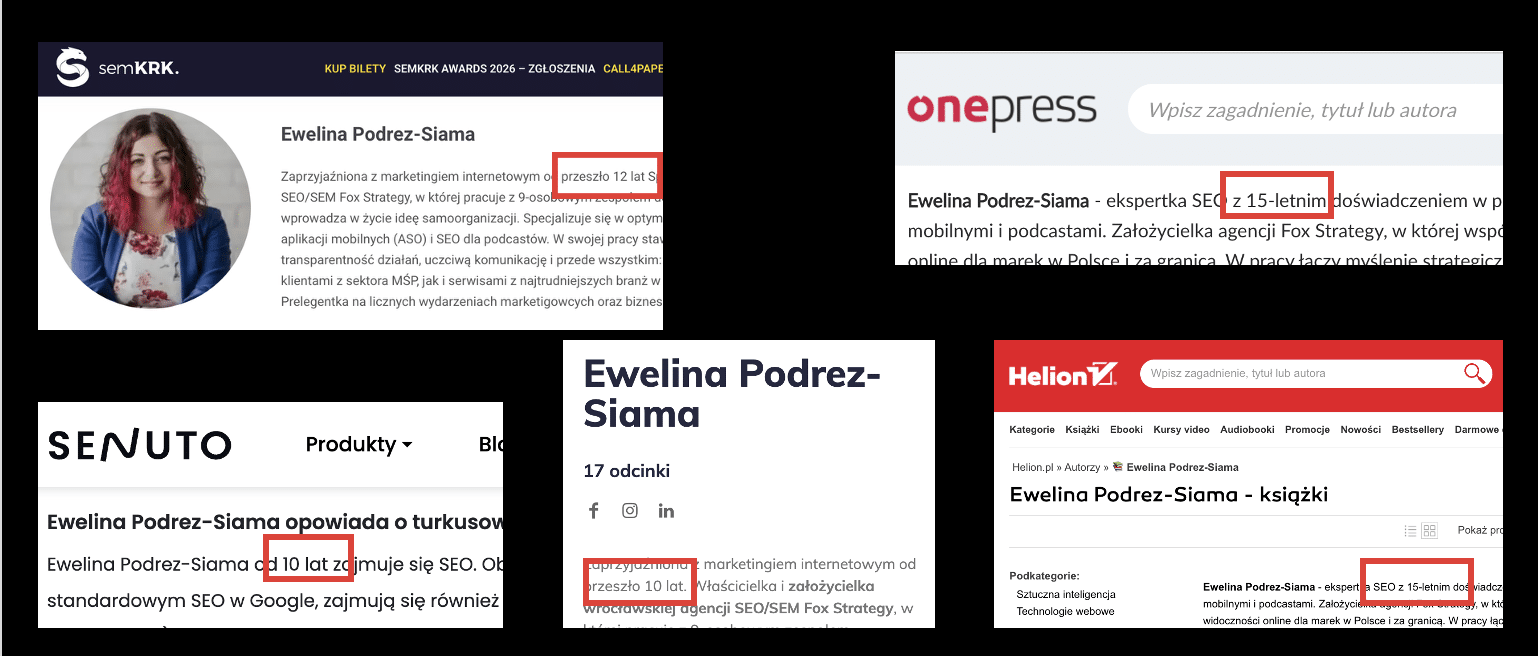
So use the same definition of yourself everywhere – give the systems a legible pattern. Don’t call yourself a “marketing expert” one place, a “digital strategist” another, and an “AI ninja” a third. Update your messaging consistently, across every channel. And where you’re not sure an update will be possible later, avoid vague phrasing – even if it means writing that you’ve worked in SEO since 2009 rather than “for 17 years.” Don’t repeat my mistakes 😉
And once you’ve organized your messaging, remember that…
Rule 3: The system doesn’t believe what you say about yourself. It believes what others can confirm about you.
Let’s say you have a website. On it, you’ve written that you:
- have X years of experience,
- have worked with the biggest brands,
- are an expert in your field.
Well done! So has half the internet.
Paradoxically, that generic messaging isn’t actually the biggest problem. Because what you put on your own website is the least credible signal for the algorithm. Precisely because, in the end, anyone can write whatever they please about themselves.
In the language of search, this is described outright as a conflict of interest – something Search Quality Raters, the people Google employs to assess websites and whose verdicts then help train the algorithms, are highly sensitive to.
So you can write that you’re an expert, that you have a young, dynamic team and free-snack Fridays. The internet will still reply: “we’ll see about that.”
What is credible to the systems?
- media mentions,
- citations,
- Wikidata with external references,
- links from authoritative domains,
- ISBNs in a publishing database,
- what others say about you.
Connections to strong, recognizable brands build your credibility too, because every fact in Wikidata is not only evidence but also a potential knowledge triple in the system:
subject — predicate — object
Which, in my case, means:
Ewelina Podrez-Siama → is the author of → the book Marka osobista w czasach AI i generatywnego wyszukiwania
And a language model can then recall it. Without context. Without my social media. Without my website. Without my involvement.
So:
Gather every mention of yourself and check whether they build a coherent picture.
If they don’t, start working on them. And if you would rather have someone untangle it with you, that is what my personal brand SEO projects are for.
What does building a brand really look like?
First you’re on the internet making content – you know that part already. Then the systems start to identify your presence. It’s that building that turns you into an entity. You appear in the knowledge graph. Roughly at that stage, you become a brand. And from that moment, the systems expand your identity.
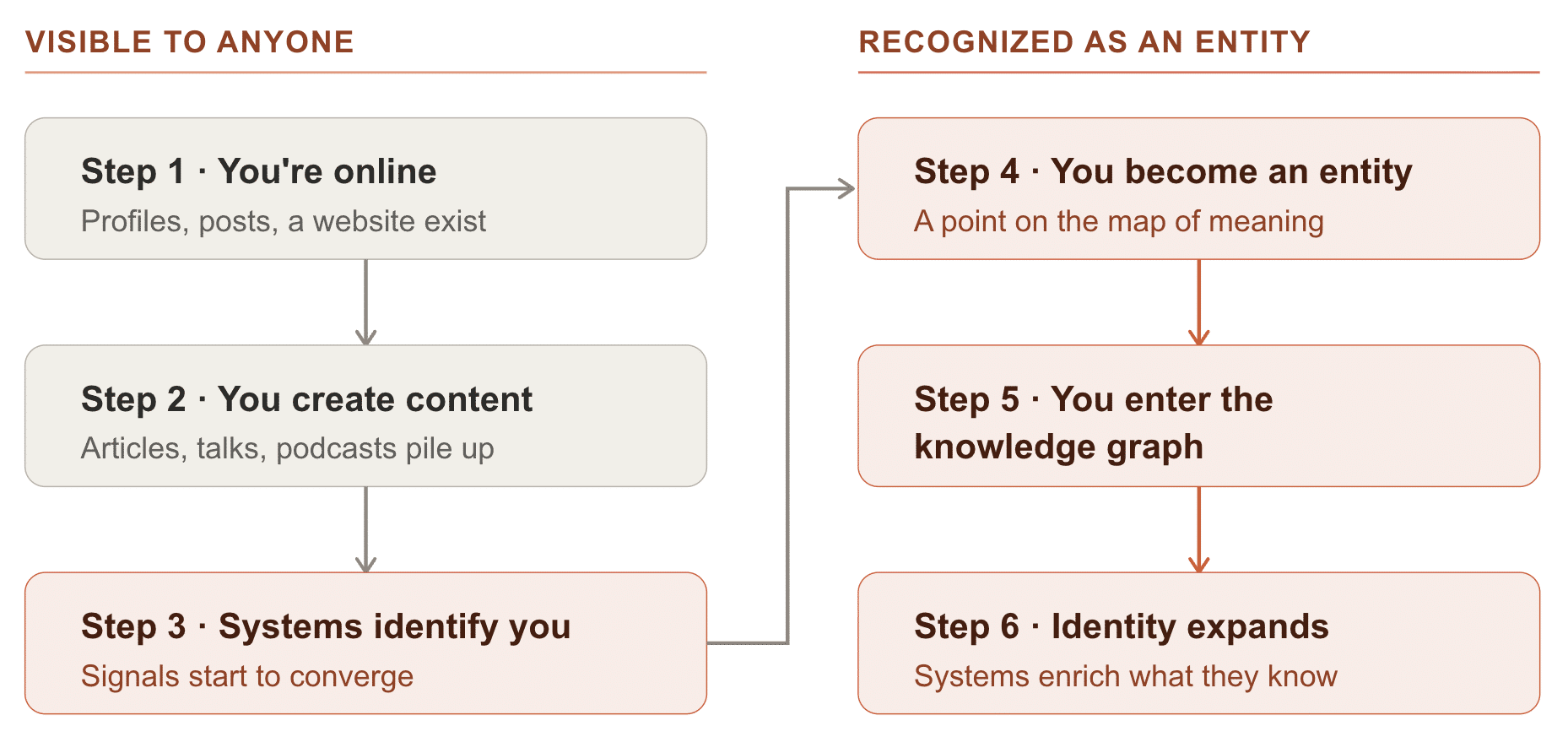
Steps 1–2 almost everyone does. Steps 3–6 hardly anyone does deliberately. And that’s exactly where the algorithm decides whether you’re someone specific (an entity) or a more or less random string of characters.
Thank you!
Thanks, to start, to everyone who stayed after the talk, sent messages, caught me in the hallways – it meant a great deal to me.
And thanks to the whole organizing team for the invitation to that demanding stage, where I got to share my perspective on the world of algorithms.
For those who weren’t at the talk, I invite you to the supplementary materials below.
Supplementary materials
Source documents – talk and book
Not opinions, not guesses. Specific sources from the talk, plus two more you’ll find in the book.
US12321706B2 – Soft Knowledge Prompts for Language Models
The patent describes a mechanism for an external memory of a language model, activated for a specific query – so-called soft prompts encoded as vectors. The experiments drew on more than 23 million knowledge triples from Wikidata (subject–predicate–object, e.g. “person X is the author of publication Y”). Every fact in your Wikidata entry is a potential knowledge triple a model can recall without context.
→ Google PatentsSearch Quality Rater Guidelines (SQRG)
Google’s public document describing how its human raters measure page quality. Trust is described here as “the most important member of the E-E-A-T family.” The guidelines state plainly that informal expertise counts as much as formal expertise – and that consistency between what you say about yourself and what the web says about you is key. 2025 version.
→ Download PDF (Google)I didn’t cover these next two sources on stage – but they’re an important part of the evidence base in the book, and they’re worth a look.
US20180046717A1 – Related Entities
The patent describes how Google identifies semantically related entities based on their co-occurrence in search results. The system analyzes query logs – if users regularly move from entity A to entity B within the same session, the algorithm strengthens the connection between them. This is the mechanism behind the logic: the company you appear in matters.
→ Google PatentsGoogle Content Warehouse API
The accidental publication of thousands of internal Google documents, before the repository was removed. It confirmed the existence of signals Google had never officially acknowledged: among them siteAuthority, click signals, and the authorObfuscatedGaiaStr field – an internal identifier for an author’s Google account, present in every indexed document. Archived by HexDocs.
→ Documentation (hexdocs.pm) · → SparkToro analysis8 steps to an entity – in order
Some steps will take you a moment, others are weeks of steady work. You can do steps 1–3 today – Wikidata is 1–4 hours, checking the API is 5 minutes, Schema.org is about an hour. Steps 4–8 are an ongoing process, not a one-off task.
resultScore in the Google Knowledge Graph API (a query-match score, not a rating of the person) was for the same Polish-language query – before and after I organized my Wikidata entry and structured data (February 2026). The change showed up within a single day.Click a step to mark it done. Your progress is saved in your browser.
- Create or complete your Wikidata.org entry · 1–4 hThis is the single most important step. Fill in: your name, profession, affiliations, publications with ISBNs, links to your profiles. Every fact is a knowledge triple. For the same Polish-language query, my resultScore went from 12 to 43 within a day of completing the entry (February 2026).Note: Wikidata has rigorous moderation. An entry without external sources confirming your presence on the web can be removed. Before you create one, make sure you have a “foundation” of links to independent sources.
- Check your resultScore in the Knowledge Graph API · 5 minNo diagnosis, no strategy. Step-by-step instructions are above. An empty result = the entity doesn’t exist. A low result = the signals are weak. Both states are fixable.
- Implement Schema.org Person on your homepage · approx. 1 hMinimum: name, profession (
jobTitle), organization (worksFor), links to profiles (sameAs).How to do it? WordPress: RankMath or Yoast. Without WP: the TechnicalSEO.com generator. Verify in Google’s tester. - Unify your identity everywhere · ongoingThe same form of your name, the same description of your specialty – LinkedIn, your blog bio, your email signature, your website, your speaker profile.
- Earn external mentions (brand mentions) · ongoingInterviews, guest articles, citations in industry media. Google tracks the co-occurrence of an entity’s name with topics – even without a link.
- Build topical authority – one topic, in depth · ongoingA topical cluster covering one area deeply is stronger than dozens of unrelated articles.
- Monitor how LLMs talk about you · ongoingAsk ChatGPT, Perplexity, and Google: “Who is [your name]?” The answers are your AI visibility report.
- Transfer the Trust Halo to new projects · ongoingEvery new project starts with an advantage when you link to it from an established personal brand. More in the Trust Halo case study.
The book that goes one step further
The talk is a sketch. The book is the map – with hard sources, case studies, and the specifics I couldn’t fit into 18 minutes. Currently available in Polish – Onepress (Helion), 2026.
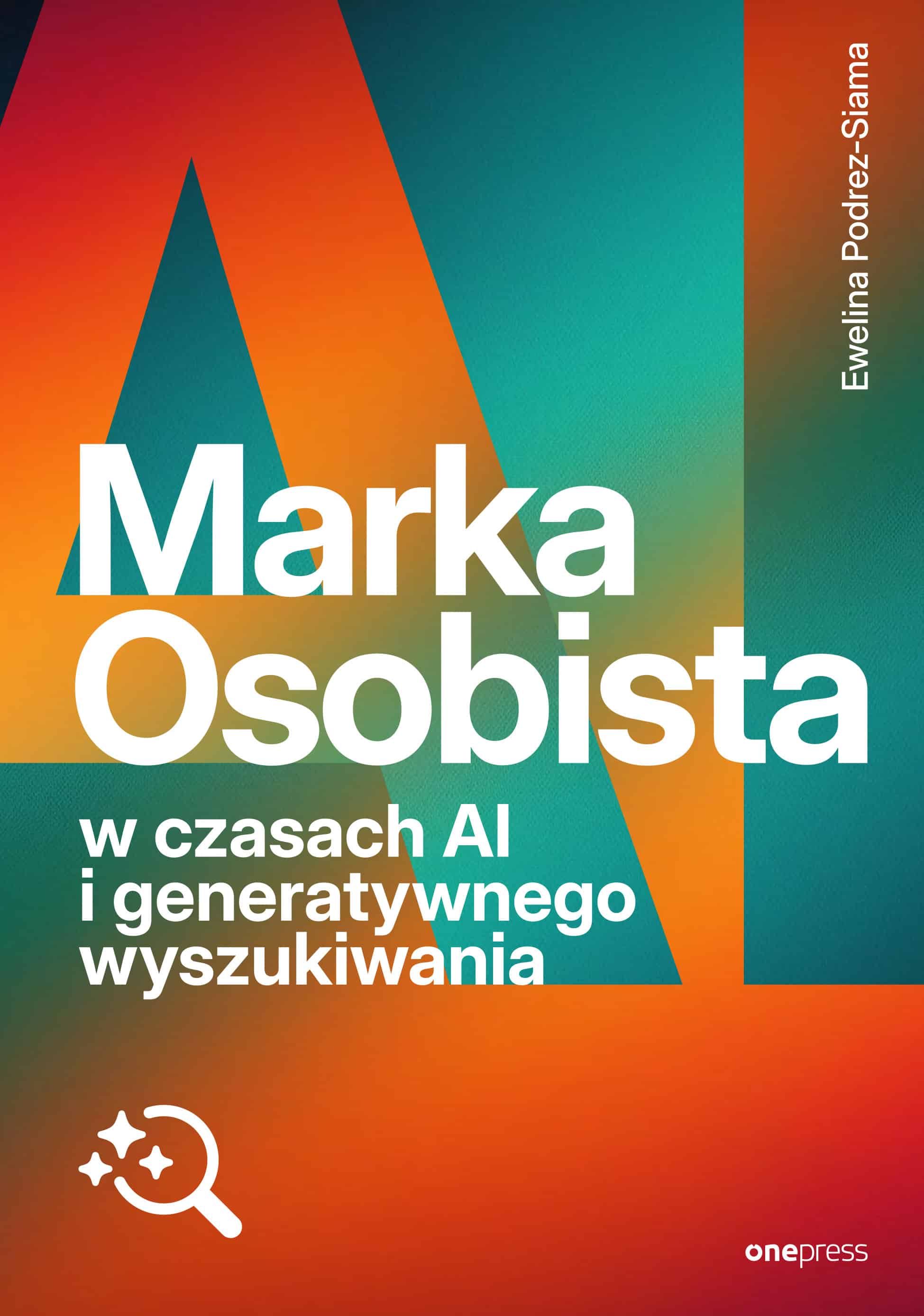
Marka osobista w czasach AI i generatywnego wyszukiwania
Ewelina Podrez-Siama · Onepress (Helion), 2026
Entities, patents, the Google leak, GEO, Trust Halo – and what to do with all of it in practice.
